
Batt Insulation in Arizona
Fiberglass batt installation for walls, ceilings, and new construction.
Batt Insulation Installation in Arizona
Batt insulation is the pre-cut, blanket-style insulation most people picture when they think of insulation, and it still has a real place in Arizona homes when it is installed correctly. Arizona Attic Insulation installs fiberglass and mineral wool batts in attics, walls, garages, and crawl spaces statewide, from Phoenix and Tucson up to Flagstaff, Prescott, and the White Mountains. Call (602) 960-3654 to schedule a free estimate.
We are an attic-first company, so we will be direct about where batts fit. In open attics with standard joist spacing and few obstructions, batts perform well and can be the right call. In cluttered, irregular attics, blow-in usually wins. In walls during remodels and new construction, batts are often the standard. The material is rarely the problem. The installation almost always is.
What Batt Insulation Is and How It Works
Batts are blankets of fibrous insulation manufactured to fit standard framing cavities: 16 or 24 inch on center, in widths and thicknesses matched to 2x4 and 2x6 construction. They work by trapping still air in millions of tiny pockets between fibers, and that trapped air is what resists heat flow. Fiberglass batts typically run R-3.1 to R-4.3 per inch depending on density.
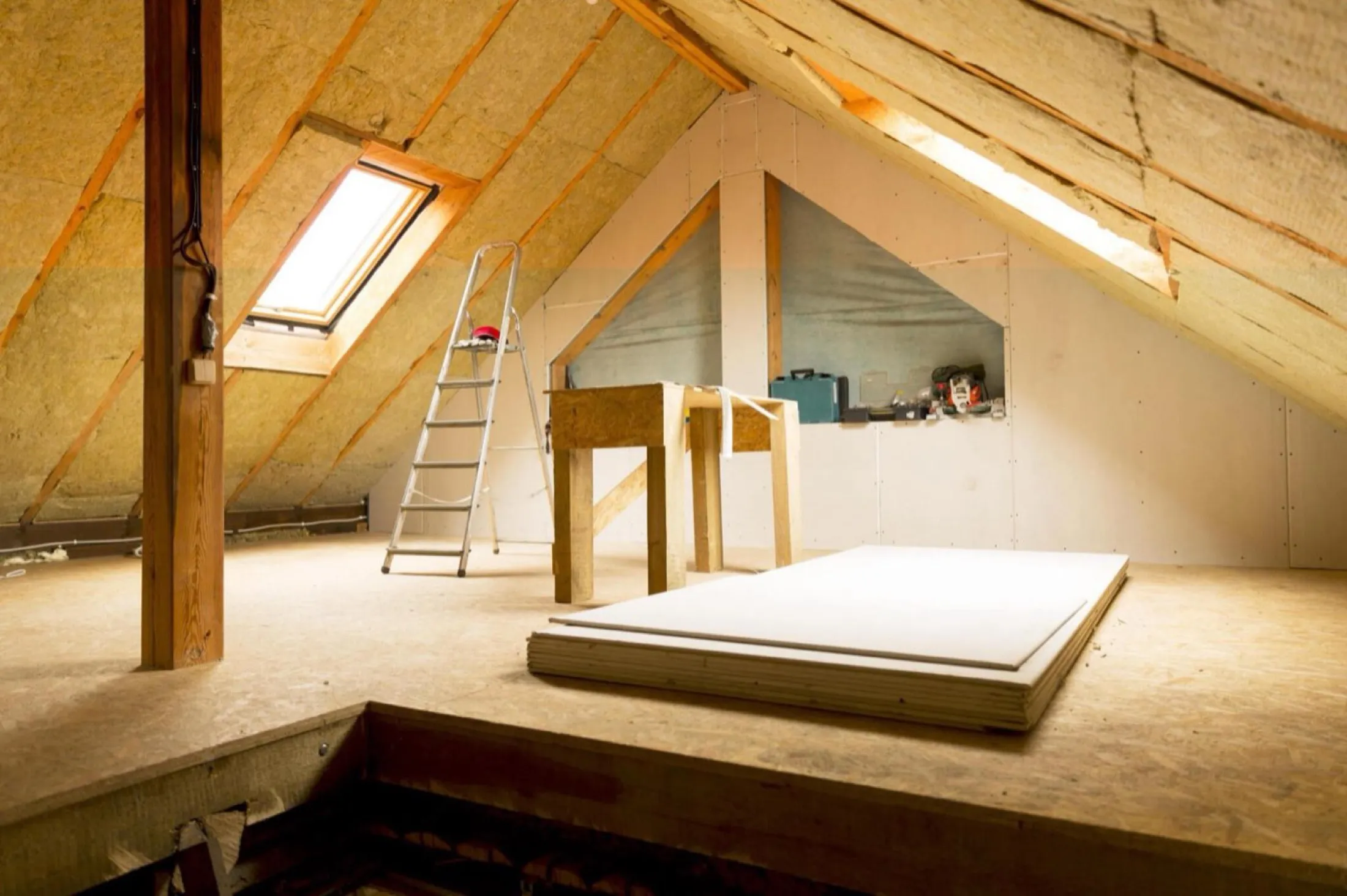
Batts come faced and unfaced. Faced batts carry a kraft paper or foil layer that acts as a vapor retarder and gives the installer a flange to staple. Unfaced batts are friction-fit and are the standard choice for adding over existing attic insulation, because layering a vapor retarder in the middle of an insulation stack can trap moisture. Which version your project needs depends on where the insulation is going and what is already there.
Where Batts Make Sense in an Arizona Home
Batts are a strong fit in a handful of situations. Open attics with standard joist spacing, minimal wiring and duct clutter, and full access from one end to the other. Knee walls and attic side walls, where a vertical surface suits a batt far better than loose fill. Garage walls and ceilings separating the garage from living space, which is one of the most common comfort complaints we hear in Arizona summers.
Batts are also the default for open wall cavities during remodels, additions, and new construction, where the cavity is fully visible before drywall goes up. Cathedral ceiling sections with uniform rafter bays can take high-density batts where depth allows. Crawl space walls and rim areas in high country homes round out the list.
Where batts do not belong: attics crowded with ductwork, cross-bracing, and junction boxes, where cutting around every obstruction leaves the seams and gaps that gut batt performance. In those attics we will recommend blow-in and explain why.
Fiberglass Batts vs Mineral Wool Batts
Fiberglass batts are the most common and most affordable batt option. They are light, widely stocked in every standard size, and deliver reliable R-value when they are cut and fit properly. In Arizona's dry desert climate they hold up indefinitely as long as they stay dry and undisturbed.
Mineral wool batts, made from spun rock or slag, cost more per batt and bring real advantages in specific situations. They are denser, so they deliver slightly higher R-value per inch and noticeably better sound control between rooms. They are more fire resistant than fiberglass, they hold their shape when cut, and they resist moisture without supporting mold growth. For garage ceilings under bedrooms, media rooms, and party walls, mineral wool is often worth the premium.
We install both. For a standard open attic in the desert lowland, fiberglass usually wins on value. For sound control or fire-sensitive applications, we will quote mineral wool and let you decide with real numbers in front of you.
R-Value Choices by Elevation
Arizona spans climate zone 2 in the desert lowland and climate zones 4 and 5 in the high country, so the right R-value depends on where your home sits. In Phoenix, Tucson, and the surrounding desert, the U.S. Department of Energy typically recommends attic insulation in the R-30 to R-60 range. In Flagstaff, Williams, Show Low, and higher elevation communities, R-49 to R-60 is the target.
Batt R-values come in fixed steps: R-19, R-21, R-25, R-30, R-38, and R-49 are the common attic and ceiling products. Reaching high targets with batts usually means layering, with the second layer run perpendicular across the joists over the first. That cross-layering also covers the joists themselves, which otherwise act as thermal bridges and let heat bypass the insulation between them.
Why Installation Quality Matters More With Batts
Here is the uncomfortable truth about batt insulation: it is the most installation-sensitive material we work with. Industry testing has shown that gaps, compression, and poor fitting can cut batt performance sharply, and batts are easy to install badly. A batt stuffed into a cavity, jammed around a wire, or compressed under a walkway loses the trapped air that gives it R-value in the first place.
Correct batt installation means each batt is cut to the actual cavity size, not torn or folded. It means splitting batts around wiring rather than smashing them over it, cutting precisely around junction boxes and pipes, and butting every seam tight with no gaps at the edges. Faced batts get their flanges stapled flat, not wadded. It is slower than blowing loose fill, and it is the only way batts deliver their rated performance.
This is also why we sometimes steer homeowners away from batts. If your attic is cluttered enough that proper batt fitting becomes a custom cutting exercise in every joist bay, blow-in will outperform it for less labor. We will show you both options at inspection.
Batt Insulation Cost in Arizona
Typical installed costs for batt insulation in Arizona run roughly $1.00 to $2.50 per square foot for fiberglass batts and somewhat more for mineral wool, depending on R-value, access, and how much custom cutting the space demands. Those are typical ranges, not a quote. A wide-open attic with standard framing sits at the low end. A garage ceiling full of obstruction cutouts sits at the high end.
Material cost alone makes batts look cheap at the home improvement store, and DIY batt installation is genuinely feasible in simple, open spaces. The labor is where performance is won or lost. If you want a professional number for your specific project, call (602) 960-3654 and we will measure and quote it in writing at no charge.
Batts vs Blow-In for Your Attic
For attic floors specifically, the comparison comes down to geometry. Open attic, standard joists, few obstructions: batts and blow-in both work, and batts have the advantage of staying put and being easy to move aside for future electrical work. Cluttered attic, irregular bays, lots of penetrations: blow-in wins on coverage, speed, and usually price.
R-value per dollar generally favors blow-in at high target depths, because blowing to 16 inches is faster than cross-layering two depths of batts. Batts claw that back in accessible spaces where fitting is clean. During your free inspection we will quote whichever options genuinely fit your attic and give you an honest recommendation between them.
Request a Free Estimate
Arizona Attic Insulation installs batt insulation statewide for attics, walls, garages, and crawl spaces, with recommendations based on your framing, your climate zone, and your budget. Every estimate is free and in writing. Call (602) 960-3654 to schedule yours.
Real Arizona Projects
Other Insulation Services
Common Questions
Is batt insulation a good fit for Phoenix-area buildings?
Yes. Batt Insulation works well for many Phoenix-area homes and commercial buildings, but the right choice depends on the space, the assembly and how it is used. During a free estimate we confirm whether batt insulation or another option fits your building.
How much does batt insulation cost?
Cost depends on the area being treated, the material and thickness, access and prep. Estimates are free and given in writing, so you know the price before any work begins.
How long does a batt insulation project take?
Most projects are completed quickly once scheduled. Your written estimate includes the expected timeline for your specific Phoenix-area project.
Want to Know What Your Project Would Cost?
Tell us about the property and we'll help you determine the next step.
Free Written Estimates • No Obligation • Local Arizona Team